Why this film matters
The original filmmaker page identifies BOSS as a 1960s crime caper. Its interest here is the attempt to carry a period narrative through a feature-length production, with a public record of editing and finishing rather than only a showcase of generated shots. The maker’s documentary background gives that experiment a specific filmmaking context.
This is inclusion based on the creator’s film and production evidence, not a claim that the journal has watched or reviewed the full feature.
Release status
Krakovsky reports completing the film in her August 31 wrap-up. Her September 24 announcement promotes a forthcoming theatrical release. Although her current biography says theatrical release has been achieved, the checked sources do not provide dated venue bookings or a verified full-film stream. Coming soon therefore describes audience access here; it does not imply the film is unfinished.
The creator’s “first” claims are not treated as independently established film history. The announcement link is a trailer and statement, not a full-film watch link.
Production evidence
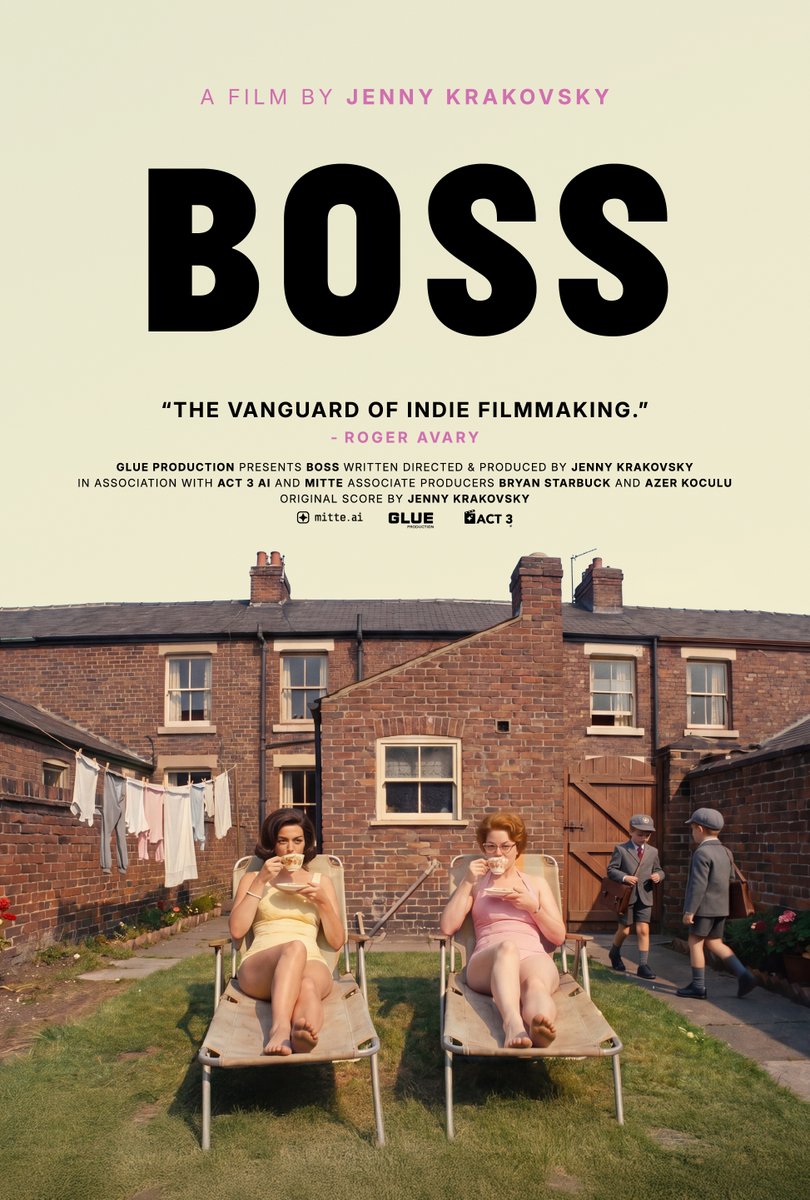
The public diary distinguishes a rough cut from picture lock and sound/grade work. That separation is useful: generation produces material, while scene selection, duration, sound and colour still determine the finished experience. The October 4 final poster credits Krakovsky with writing, direction, production and the original score, and names Bryan Starbuck and Azer Koculu as associate producers. It presents Glue Production, in association with ACT 3 AI and MITTE. Her account of doing the creative production work herself should not be read as a claim that the film has no credited collaborators. These company associations do not establish which software was used.
A final runtime, itemised budget, full credit roll and verified model/version inventory remain unknown in this entry. The diary’s soundtrack upload is not the feature’s runtime. The final wrap-up mentions film-emulation work, but its auto-generated captions do not establish a reliable product spelling, so no tool name is guessed.
October 22 — performance and sound in the maker’s account
The BBC Radical interview, uploaded October 21, adds a direct production account. Around 27–29 minutes, Krakovsky describes performing the dialogue herself, editing the audio in GarageBand, using ElevenLabs voice processing and carrying that timing into Seedance scenes. The interview discusses voices found online; it does not supply an independently checked permissions account.
Around 36 minutes she estimates roughly $17,000 for technology/inference. This is a scoped maker estimate, not a total including human labour or a replacement for a full budget. Exact model versions and a complete final inventory remain unknown.
The broadcaster describes a forthcoming North American cinema release, without dated venue bookings in this source. The audience-access status therefore remains Coming soon. This production interview is not a verified new screening or full-film watch link.