Why this film matters
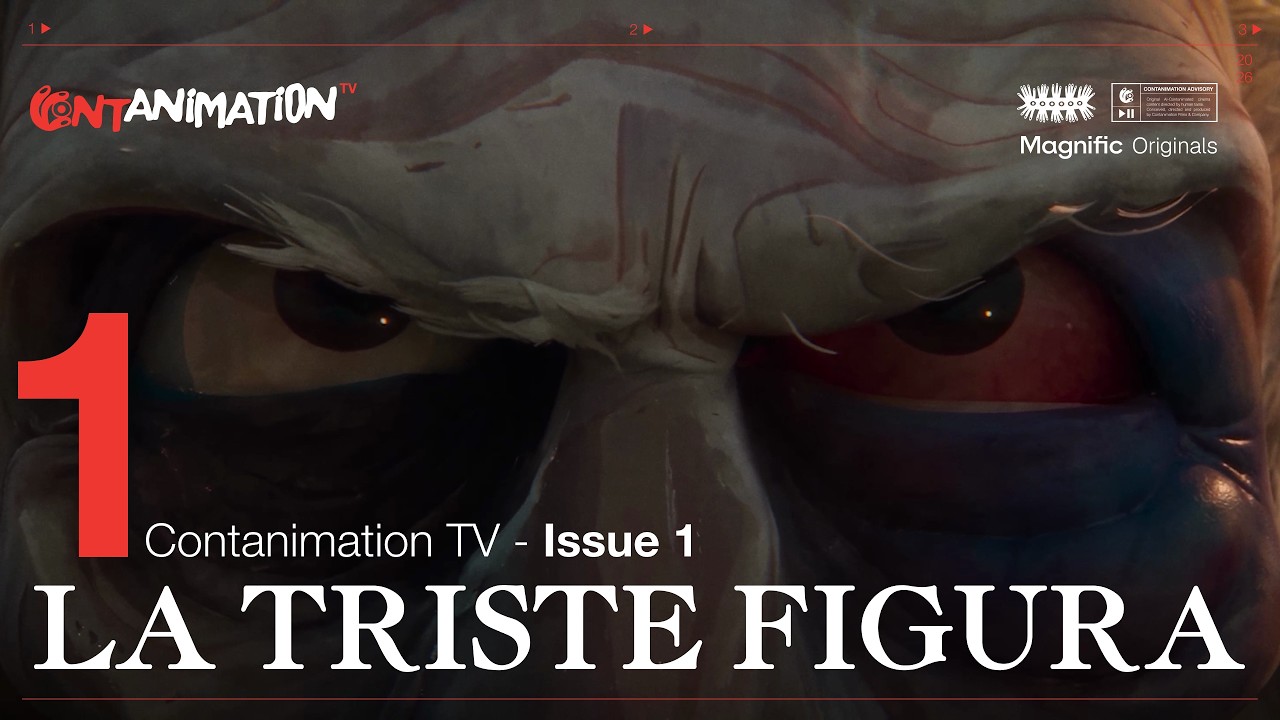
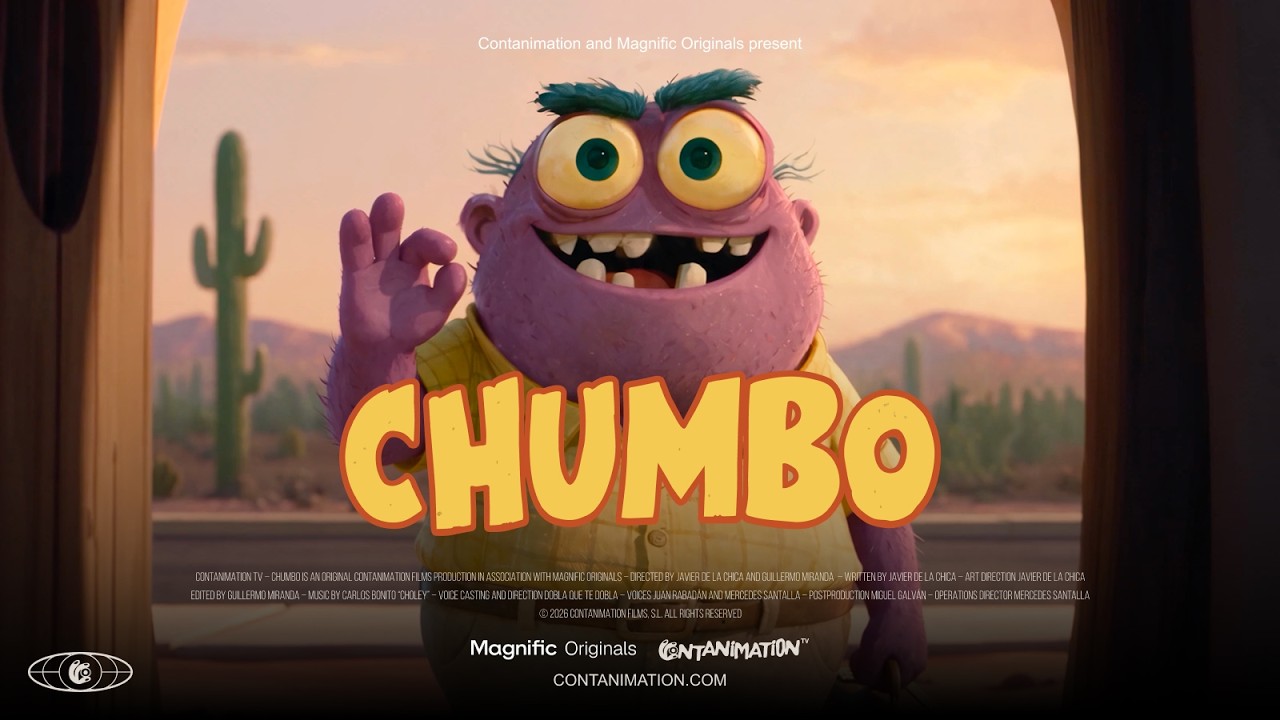
The second Contanimation TV issue makes escape from reality a social routine: Chumbo sells drops to neighbours who depend on them, while his own route keeps bringing him to Bizney, whose missing husband prevents the relationship he wants. The contradiction gives the surreal imagery a dramatic purpose. The seller of happiness has a problem his product cannot simply solve.
The complete October 22 YouTube release runs 15:14. Its description calls the short 13 minutes, while the official case study lists 15; the studio’s X upload is a shorter approximately 14:45 presentation. This entry uses the complete linked YouTube player rather than silently treating those runtimes as identical. The work stands alone within the anthology.
How continuity was built
The original case study starts with a character design and questions about his suffering; those questions developed into the script and setting. The team then separated characters, expressions, empty sets and props into a prepared asset library. Names placed on reference sheets let prompts refer to a character directly.
Its 23-second tour through neighbouring rooms uses 20 references. Dark foreground objects provide transition points, but the result is not an untouched single generation: the best sections of different takes were combined and masked by hand. For a 30-second fight with 13 shots, the makers describe more than 25 takes, clarifying whether a direction means the character’s hand or the side of the frame. These are concrete examples of staging, selection and finishing controlling continuity.
The account names Seedance 2.5 and a video-first method for producing still references. Magnific’s association with the production is explicit; its published generation and labour figures remain attributed rather than proof of a complete cost accounting. The original release, full description, available captions, sampled footage and production source were checked; no full critical review is claimed.
November 1 — a later production account
The makers’ new figures retain 272 final shots but report 1,476 video generations, 855 images, five weeks and 74 takes for one fall. The earlier case study above reports 1,327 video generations and 32 days. Neither checked source reconciles the difference or defines whether the counts include the same stages, so both remain dated, attributed accounts rather than a silently corrected total.
The useful lesson is the concentration of iteration around a particular action: one fall can demand many more attempts than a simple average suggests. These figures do not establish a cash budget, distinct-person crew size or an independently audited efficiency comparison.
November 4 — one shot, four references
The studio’s November 3 One Shot: The Kiss breakdown supplies two character sheets (Bizney and Chumbo), a car reference and a flowering-cactus environment reference. It reports one 17-second generation with Seedance Pro 2.5 on Magnific for this particular shot, not for the full film.
Its published prompt specifies the rear-window view, the pair’s seating, the car’s slow roll, a retreating camera and flowers increasing over time. References establish the people, prop and world; the text controls their relationships and the shot’s progression. That is a concrete staging method, without a guarantee of first-take success elsewhere. The four original breakdown images and linked final-shot post were inspected; the prompt is paraphrased rather than copied.