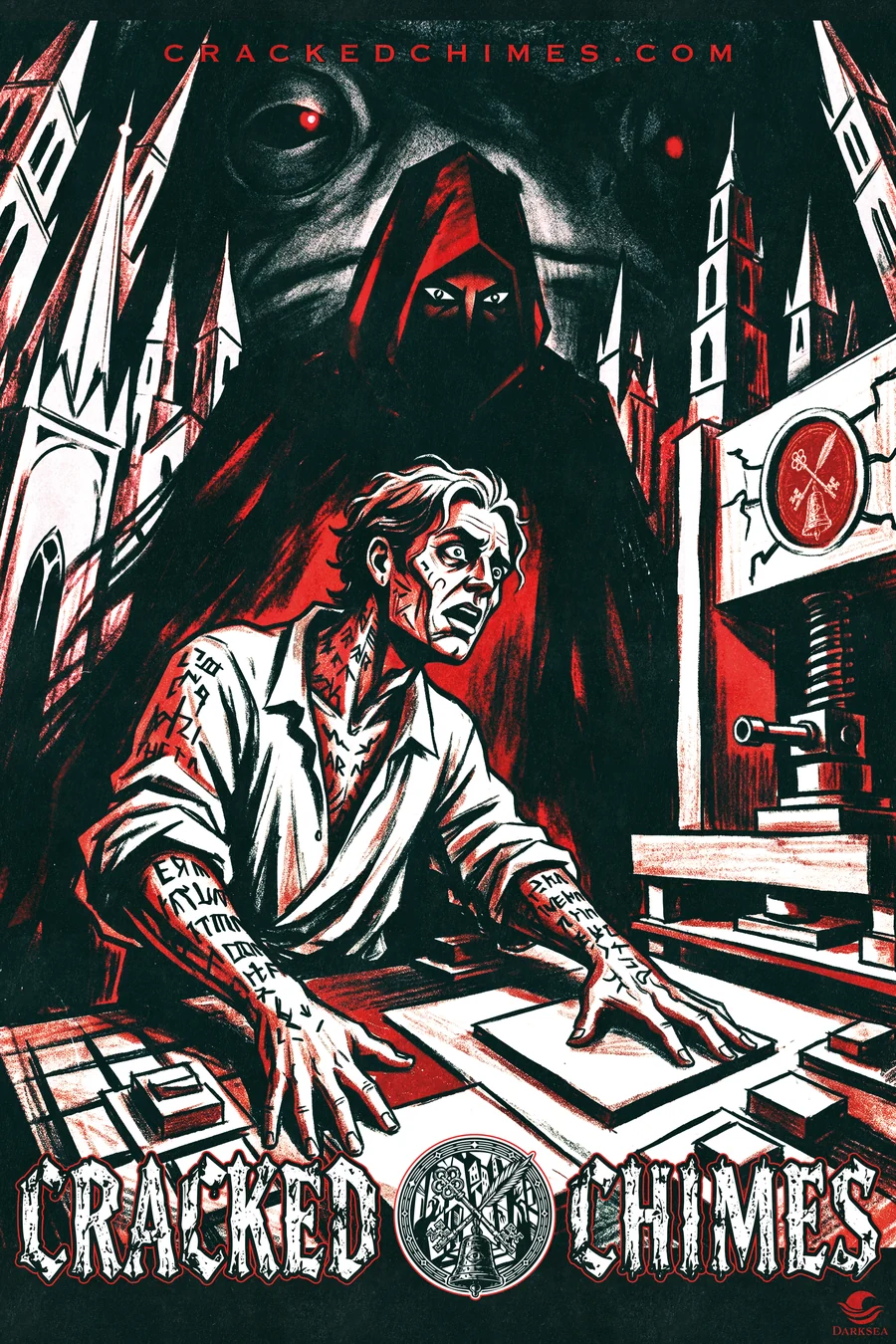
The original film site sets the story in early 17th-century Leiden and identifies H. P. Lovecraft’s St. Toad’s as its literary source. A troubled English Separatist accepts an occult printing job and follows an obsession toward a corrupted church. The release describes minimal dialogue and a visual approach drawing on Bosch and Dürer.
Why this film matters
An expressionist horror story is a promising use of generated imagery because distorted space can serve the character’s fear. The important question is whether visual transformation follows dramatic intention rather than becoming a succession of unrelated surprises. This is a reason for inclusion and further viewing, not a claim that we have watched the whole film.
Its named sound and writing collaborators also provide a useful counterweight to simplified accounts of AI authorship. The film has a production team and an original musical contribution; generated pictures do not establish that every part of the work was synthesized.
Credits and availability
AI International Film Festival lists an 18-minute September 12 screening and Best Horror / Best International Short awards. Its summary names Scott Mongeau as director and gives a medieval setting. The original production site instead credits Anthony Jegu with direction and specifies 17th-century Leiden; this entry follows those production sources and makes the discrepancy explicit.
The linked video is a trailer, not the full film. September’s winning programme was not listed in the Eventive catalogue checked October 3. The verified @CrackedChimes account is the project’s account, not a personal filmmaker profile.